
How to issue 1099
How to Issue 1099 Forms Correctly: 8 Steps
Table of Contents
- What a 1099 Actually Reports
- Why January Is the Wrong Time to Start
- How the Filing Calendar Works
- 8 Steps to Issue a 1099 Correctly
- Case Study: The W-9 Chase That Cost a Boise Agency $4,200
- Frequently Asked Questions
Introduction
How to issue 1099 forms is a question that arrives every January and is always answered under pressure. The work itself is straightforward. The timing is what makes it difficult.
Almost everything that goes wrong traces back to a missing W-9, which is a document you could have collected months earlier in about ninety seconds.
This guide covers what a 1099 reports, which payments qualify, the filing calendar, and the eight steps that make January a review rather than a scramble.
1. What a 1099 Actually Reports
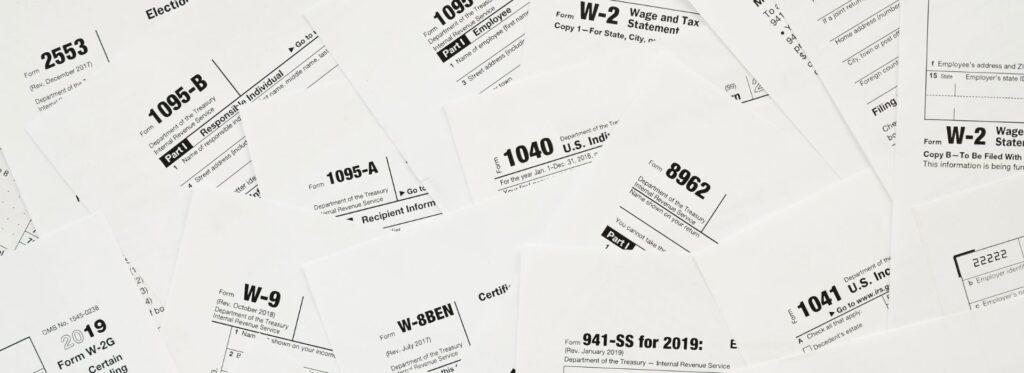
A 1099 reports payments made to someone who is not an employee. The business files it, the recipient receives a copy, and the IRS matches it against what that person declares.
Form 1099-NEC covers non-employee compensation, which is what most small businesses issue. Other variants exist for rent, interest and other payment types, but NEC is the one that matters for contractor work.
| Payment type | Form | Reportable? |
|---|---|---|
| Contractor services over the threshold | 1099-NEC | Yes |
| Payments to a corporation | 1099-NEC | Usually no |
| Payments to an attorney | 1099-NEC | Yes, even if incorporated |
| Rent paid to a landlord | 1099-MISC | Yes |
| Payments via card or third-party platform | Reported by processor | No, do not duplicate |
| Employee wages | W-2 | No, never a 1099 |
2. Why January Is the Wrong Time to Start
The recipient deadline falls in late January with no practical extension. Chasing a W-9 from a contractor you stopped working with in March is slow, and some never respond at all.
Without a tax identification number you face a choice between filing an incomplete form and applying backup withholding retrospectively. Neither is comfortable and both carry cost.
Penalties apply per form and escalate with lateness. The IRS guidance on Form 1099-NEC sets out the reporting requirements and the correction process.
- W-9 collection is easy at engagement and difficult eleven months later
- Penalties apply per form, so twenty contractors multiply the exposure
- Corrections cost time and signal weak record keeping
- Backup withholding becomes necessary when a TIN is missing
3. How the Filing Calendar Works
The calendar is tight and the dates do not move. Recipient copies and IRS filing both fall in late January for 1099-NEC, which is earlier than most other information returns.
What is payroll processing contributing here is the data. Contractor payments recorded consistently through the year make 1099 preparation a report rather than an investigation.
- At engagement: collect the W-9 before the first payment
- Throughout the year: code contractor payments to their own account, part of what is payroll processing delivers
- November: run a payment report and chase any missing W-9 forms
- Early January: verify totals against the ledger
- Late January: issue recipient copies and file with the IRS
4. 8 Steps to Issue a 1099 Correctly
Step one happens at engagement. Everything else follows from having done it.
Step 1: Collect a W-9 Before the First Payment
Make it a condition of payment rather than a follow-up request. A contractor waiting to be paid responds within hours. The same person in January may not respond at all.
The W-9 gives you the legal name, tax identification number and entity type, which are the three things the form requires.
Step 2: Determine Who Actually Needs One
Contractors paid above the reporting threshold during the calendar year, for services, in the course of business. Payments to corporations are generally exempt, with attorneys being the notable exception. Form 940 vs 941 does not apply to contractors, because they generate neither return.
Step 3: Exclude Card and Platform Payments
Payments made by credit card or through a third-party settlement organisation are reported by the processor on Form 1099-K. Issuing a 1099-NEC for the same payment double-reports the income and creates a problem for the recipient.
Step 4: Verify the Entity Type
A sole proprietor and a single-member LLC both receive a 1099. An S-corporation generally does not. The W-9 states this, which is another reason to hold one for every contractor.
Step 5: Reconcile Payments to the Ledger
Total contractor payments per recipient must agree to your accounting records, which what is payroll processing already produces each period. A discrepancy here means either a missed payment or a miscoded one, and both are easier to fix before filing.
Step 6: Confirm Names and TINs Match
The legal name and tax identification number must match IRS records exactly. A mismatch triggers a notice and may require backup withholding on future payments.
Step 7: File Recipient Copies and the IRS Return
Both are due in late January for 1099-NEC, the same window as the annual payroll set, so form 940 vs 941 planning belongs alongside this work. Electronic filing is required above a volume threshold and is simpler in any case. Keep proof of filing with the year end working papers.
Step 8: Correct Errors Promptly
If a figure or a TIN is wrong, file a corrected return rather than hoping it passes. Corrections filed quickly attract lower penalties than those found by the IRS later.
Knowing how to issue 1099 forms properly includes knowing that a correction is routine, not an admission of anything.

5. Case Study: The W-9 Chase That Cost a Boise Agency $4,200
Nineteen Contractors, Six Missing Forms, One Deadline
A digital agency in Boise engaged nineteen contractors across a year. Payments were recorded correctly and the bookkeeping was current. Nobody had collected W-9 forms at engagement.
In the second week of January they began chasing. Thirteen responded. Six did not, including two who had stopped working with the agency the previous spring.
| Outcome | Count | Cost |
|---|---|---|
| W-9 received after chasing | 13 | Staff time only |
| Filed late pending TIN | 4 | $1,200 in penalties |
| Filed with incorrect TIN | 2 | $600 plus correction |
| Corrected returns filed | 2 | $400 in fees |
| Backup withholding exposure | 2 | $2,000 assessed |
| Total | – | $4,200 |
The agency now attaches a W-9 request to every contractor onboarding email and will not release a first payment without one. The following January took two hours instead of three weeks.
6. Frequently Asked Questions
Collect a W-9 from each contractor before their first payment, identify who was paid above the reporting threshold for services during the calendar year, reconcile the totals to your ledger, then issue recipient copies and file with the IRS in late January.
Contractors paid above the reporting threshold for services in the course of business. Payments to corporations are generally exempt, though attorneys receive one regardless of entity type. Employees never receive a 1099, they receive a W-2.
Form 1099-NEC must reach recipients and be filed with the IRS in late January. This is earlier than several other information returns and there is no practical extension, which is why W-9 collection should happen at engagement.
Penalties apply per form and escalate the later the filing. With twenty contractors the exposure multiplies quickly. Filing promptly with an incomplete TIN generally costs less than filing late with a complete one.
No. Payments made by card or through a third-party settlement organisation are reported by the processor on Form 1099-K. Issuing a 1099-NEC for the same payment double-reports the income for the recipient.
1099 vs w2 comes down to classification. A W-2 employee has tax withheld and the employer pays half of FICA. A 1099 contractor receives gross payment and handles their own self-employment tax. The classification follows control, not preference.
Conclusion
The entire difficulty of 1099 season is caused by a document that takes ninety seconds to collect. Make the W-9 a condition of the first payment and January becomes administrative.
Explore our payroll services, read how classification works, or our guide to the 1099 threshold. Year end planning sits in our year end accounting checklist.
Ask us to handle your 1099 filing.
About the Author
Saloni Modi | Senior Accountant, Finkeepers
Qualified accountant with over a decade advising US small businesses on information reporting and contractor compliance. Filing guidance referenced here is published by the IRS.
Disclaimer
This article provides general guidance for educational purposes only. Reporting thresholds, deadlines and penalty rates change. Always consult a qualified CPA before filing information returns. Last updated October 2026.

Built by experienced professionals, Finkeepers delivers reliable accounting services for startups and SMBs, powered by proven processes and modern software.
Contact Info:
-
Address: 30 N Gould ST STE R, Sheridan, Wyoming, 82801 United States
-
Email: hi@finkeepers.us
-
Phone: +1 (408) 370-2711